Well Water Testing in Virginia: What to Test For and How Often
Test your well for coliform bacteria and nitrate every year, and run a broader panel every three to five years. Test immediately, whatever the schedule says, if the water changes in taste, smell or appearance, if there is flooding nearby, if anyone in the house has recurring stomach illness, or if you are buying the property.
That is the whole answer. The part many well owners do not realize is why it falls to them at all: nobody else is testing your water. Not the county, not the state, not anyone. A private well is a private water system, and the testing is entirely the owner's responsibility.
Why Nobody Else Is Testing Your Water
Public water systems are tested constantly under federal rules, with results reported to the people who drink it. A private well sits outside all of that.
The only points where testing is usually mandated are at the moment a new well is drilled, and often during a property sale when a lender requires it. Between those two events, which can be decades apart, the well is tested exactly as often as the owner decides to test it.
That matters because the contaminants that most often turn up are ones you cannot detect. Coliform bacteria has no taste or smell. Nitrate has no taste or smell. Water that looks perfectly clear in a glass tells you nothing about either.
The Testing Schedule at a Glance
| Test | How often | Why it matters |
|---|---|---|
| Total coliform bacteria | Every year | Indicates a pathway for surface contamination |
| E. coli | Every year, with coliform | Direct evidence of fecal contamination |
| Nitrate and nitrite | Every year | Serious risk to infants, no taste or smell |
| pH, hardness, iron, manganese | Every three to five years | Explains staining, scale and equipment wear |
| Lead and copper | Every three to five years | Usually from plumbing rather than the aquifer |
| Arsenic | Every three to five years | Naturally occurring in some formations |
| Sulfate, chloride, total dissolved solids | Every three to five years | Taste, corrosion and general water character |
| Anything, after a change | Immediately | A change is the signal, not the schedule |
The Annual Tests: Bacteria and Nitrate
Total coliform bacteria is the standard indicator test. Coliform bacteria are common in soil and surface water and mostly harmless in themselves. What their presence tells you is that there is a pathway from the surface into your well, and if coliform can get in, so can things that are not harmless.
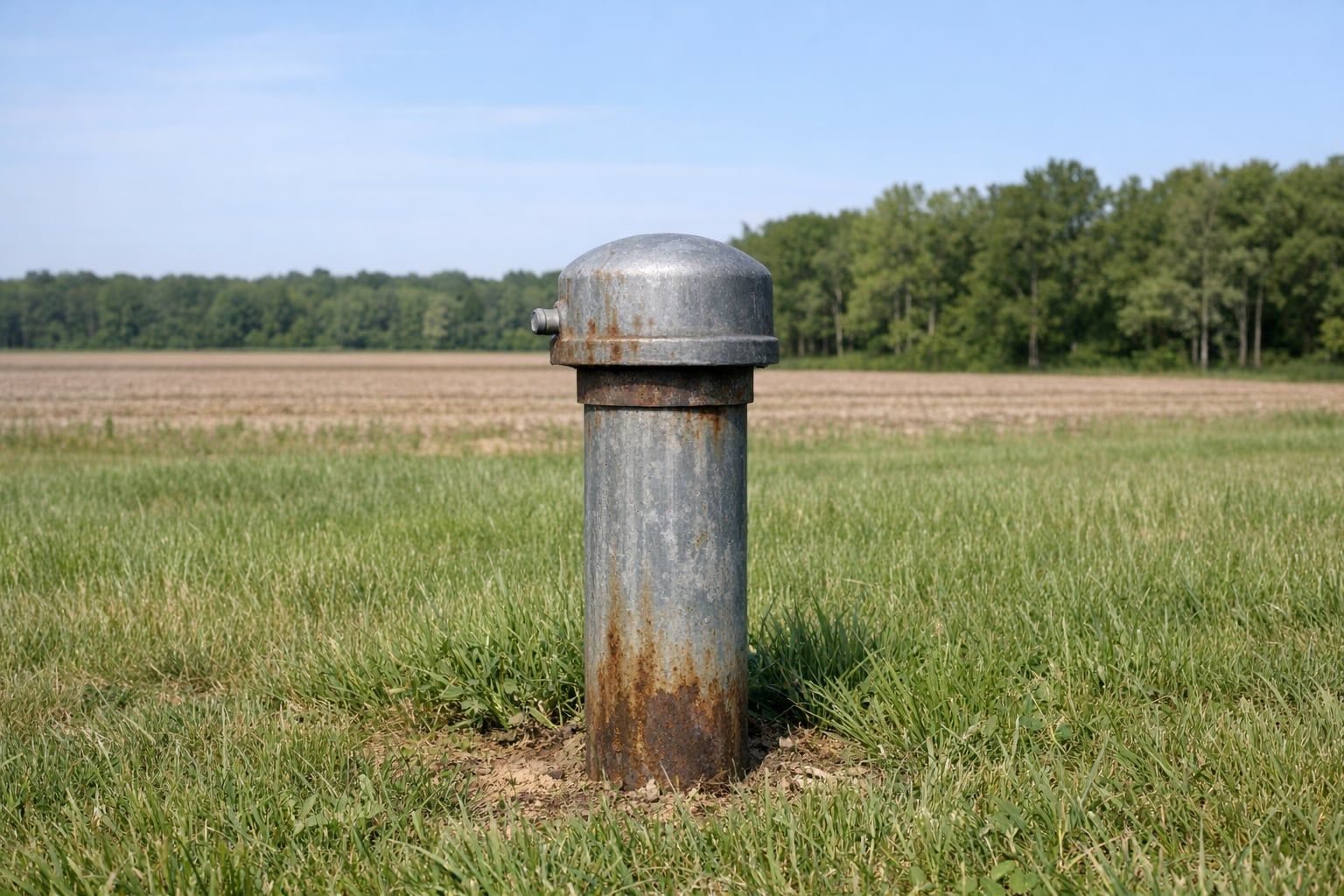
A positive result is a plumbing and construction question more than a water question. It usually points at a cracked well cap, a casing that has corroded or separated, a well head sitting too low so runoff pools around it, or a nearby septic problem.
E. coli is the follow-up that matters most. Where total coliform says a pathway exists, E. coli says that pathway is carrying fecal contamination. That is an immediate stop-drinking situation until it is resolved.
Nitrate is the other annual test and the one people underestimate. It gets into groundwater from fertilizer, manure and septic systems. High nitrate is specifically dangerous to infants under six months, where it interferes with the blood's ability to carry oxygen. It cannot be detected by taste, smell or appearance, and boiling water concentrates it rather than removing it.
The Broader Panel, Every Three to Five Years
The wider panel is less about acute risk and more about understanding what your water actually is.
pH, hardness, iron and manganese explain most of the everyday complaints: orange staining in fixtures, scale on the kettle, laundry coming out dingy, water heaters failing early. None of these are health issues, and all of them cost money over time.
Lead and copper are worth testing because they usually come from the plumbing rather than the ground, which means the age of the house matters as much as the well. Arsenic occurs naturally in some rock formations and is worth ruling out at least once so you know where you stand.
The genuine value of running this panel periodically is the trend. One set of results is a snapshot. Three sets across a decade tell you whether something is changing, and a change is what actually warrants attention.
When to Test Immediately, Whatever the Schedule Says
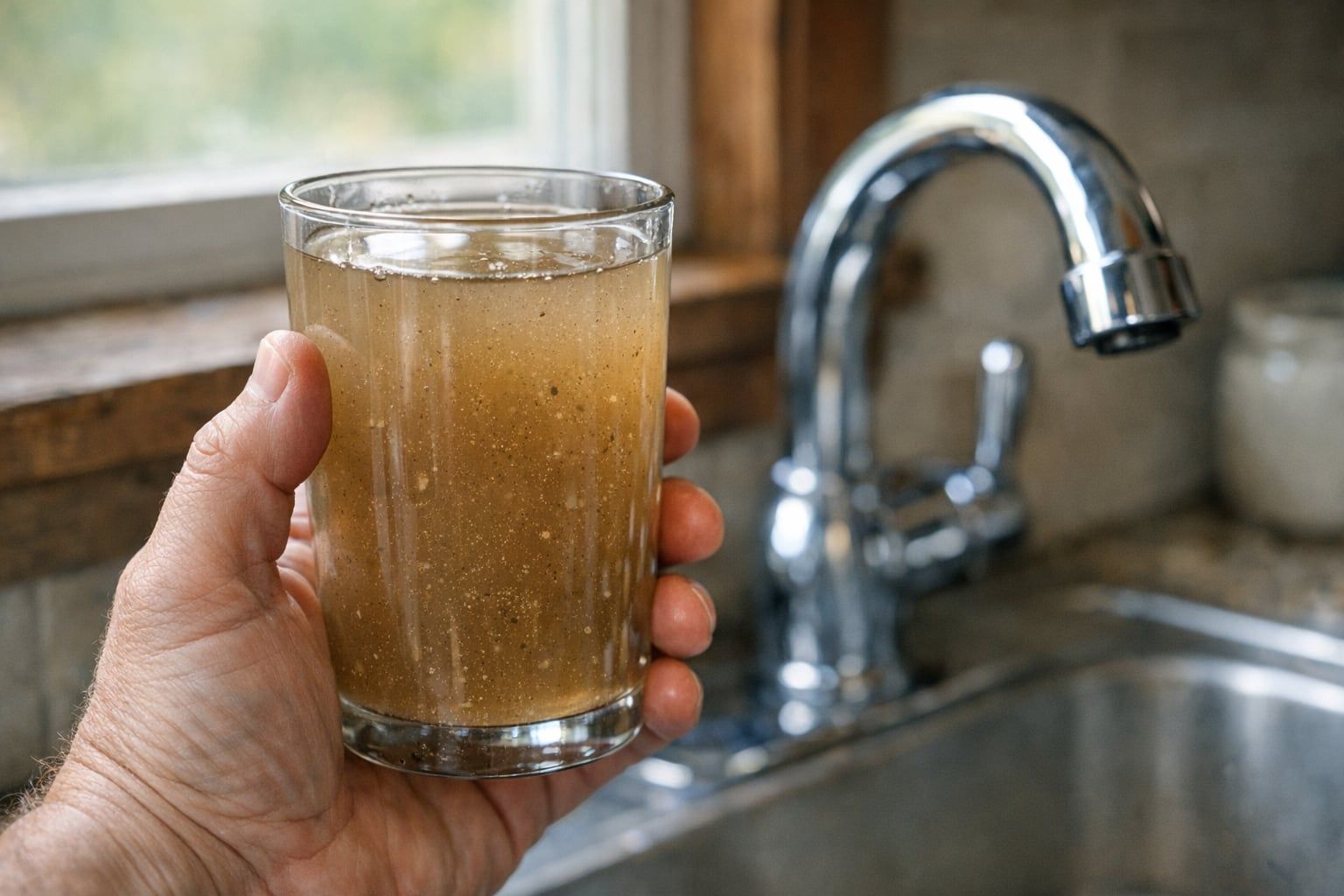
- The water changes. New taste, smell, color or cloudiness. Any change is worth a test, and cloudiness after rain especially so, because that suggests surface water is reaching the well.
- Flooding. If floodwater has reached the well head, treat the water as unsafe until it tests clean.
- Recurring stomach illness in the household with no other explanation.
- Any work on the well or plumbing, including a pump replacement, since the system was opened.
- Buying or selling. A standard home inspection does not test the well, and a buyer should never assume it did.
- A new nearby land use, such as a septic install, a fuel tank, or intensive agriculture close by.
- The well ran dry and recovered, since drawing a well down hard can pull in water it does not normally draw.
How to Collect a Sample Correctly
A badly collected sample produces a wrong answer, and the most common wrong answer is a false positive that sends you chasing a problem you do not have.
Use the container the lab provides, since it is sterile and may contain a preservative. Never rinse it. Pick a tap that has no aerator, screen or filter attached, and take it from as close to the well as possible rather than from a fridge dispenser or a filtered tap.
Run the cold water for several minutes first to clear standing water from the plumbing. Do not touch the inside of the bottle or the cap. Fill to the marked line, cap it immediately, and keep it cold. Labs generally require the sample within a day, so collect it on a morning when you can deliver it, not on a Friday evening.
Skipping the flush or using a kitchen tap with an aerator are the two mistakes that most often produce a bacteria positive from a perfectly sound well.
What the Results Actually Mean
Results arrive as numbers against limits, and the useful reading is in the pattern rather than any single line.
Coliform present but E. coli absent generally means a pathway exists without confirmed fecal contamination. The usual course is to disinfect the well, correct whatever let it in, and retest. Disinfecting without finding the cause simply resets the clock.
Both present is more serious and means stop drinking the water, use an alternative supply, and get the well looked at before anything else.
Nitrate above the limit means no infant should drink it and no formula should be mixed with it, and again boiling makes it worse rather than better.
Repeated positives after disinfection almost always point at construction rather than contamination events. A failed casing keeps letting surface water in no matter how many times the well is shocked, which is covered in our guide on whether to repair your old well or drill a new one. If the water is visibly muddy rather than just testing positive, that is the same underlying problem.
What to Do About a Bad Result
A positive result is not an emergency in most cases, but it does need a sequence rather than a reaction.
The first step is to stop drinking the water if E. coli was detected or if nitrate is high and there is an infant in the house. Bottled water is the short-term answer, and for nitrate specifically it has to be bottled rather than boiled.
The second step is to retest before doing anything expensive. A single bacteria positive is quite often a sampling error, and a clean retest taken carefully will save you from disinfecting a well that was never contaminated.
If the retest confirms it, the well gets disinfected and, more importantly, inspected. Shock chlorination kills what is currently in the well. It does nothing about the opening that let it in, which is why the inspection matters more than the chlorine. Check the well cap for cracks and a proper seal, look at whether the casing stands high enough above grade, and see whether the ground slopes away from the well head or lets water pool against it.
The last step is the one people skip, which is retesting again a couple of weeks after the work. That is what tells you the fix held.
What Testing Costs
Bacteria and nitrate testing through a local health department or a state-certified lab is inexpensive, and it is the least costly thing you will ever do for your water system. Broader panels cost more because they measure more.
We do not quote lab fees here because they are set by the labs and health departments rather than by us, and they change. Your local health department will tell you their current fee and which certified labs serve your area, and that is the authoritative answer rather than a number on a contractor's website.
Why Virginia Well Owners Call Dexter Well Services
We are a family firm, two generations in, with farming roots, working across Staunton, Waynesboro, Verona, Fishersville, Churchville and Augusta County, along with Culpeper and Culpeper County.
- Licensed Virginia well contractors. When a test comes back positive, the fix is usually well construction, and that is our trade.
- We look for the cause, not just the symptom. Shocking a well without finding the pathway is a temporary result.
- Cory handles service work as our technician.
- Stainless steel and Grundfos pumps, chosen for long life.
- Warrantied work. We stand behind what we install.
- Same-day emergency service when water is unsafe or unavailable.
Questions About Your Water? Let Us Take a Look
If a test has come back positive, or your water has changed and you are not sure what to do first, tell us what the results said and what you are seeing. Most of the time the useful next step is obvious once someone has looked at the well head and the casing.
Call us in Staunton at 540.820.0376 or in Culpeper at 540.718.9267.
Frequently Asked Questions
How often should I test my well water in Virginia?
Test for coliform bacteria and nitrate every year, and run a broader panel covering pH, hardness, metals and arsenic every three to five years. Test immediately whenever the water changes, after flooding, or after any work on the well.
Does the state test private wells in Virginia?
No. Private wells sit outside the rules that govern public water systems. Testing is usually required only when a well is first drilled and often during a property sale. Between those, it is entirely the owner's responsibility.
What does it mean if my well tests positive for coliform bacteria?
It means there is a pathway from the surface into your well. Coliform itself is usually harmless, but if it can get in, so can things that are not. The cause is often a cracked well cap, corroded casing or pooling runoff around the well head.
Is nitrate in well water dangerous?
It can be, particularly for infants under six months, where it interferes with the blood's ability to carry oxygen. It has no taste, smell or appearance, so testing is the only way to know. Boiling concentrates nitrate rather than removing it.
How much does well water testing cost in Virginia?
Bacteria and nitrate testing through a health department or certified lab is inexpensive. Broader panels cost more. Fees are set by the labs and health departments rather than by contractors, so your local health department is the authoritative source.
How do I collect a well water sample properly?
Use the lab's sterile container and never rinse it. Choose a tap with no aerator or filter, run cold water several minutes first, avoid touching the bottle interior, fill to the line, and keep it cold. Deliver it within the lab's time limit.
My well keeps testing positive after disinfection. Why?
Repeated positives after shocking almost always mean a construction problem rather than a one-off contamination event. A cracked or corroded casing keeps admitting surface water regardless of how often the well is disinfected, so the casing has to be addressed.