How Much Does It Cost to Drill a Well in Virginia? A 2026 Homeowner Guide
The honest answer to what a well costs in Virginia is that nobody can tell you until they know how deep yours has to go, and nobody knows that until they drill. Well drilling is priced by the foot, the depth is decided by geology rather than by preference, and the geology changes from one side of a property line to the other.
That is not a dodge, and this page is not going to leave you with nothing. What we can give you is the structure of the price: what you are paying for, what makes one property more expensive than the next, which line items belong on a complete quote, and how to compare two quotes that look different. Armed with that, you will know whether a number you are given is reasonable long before you know what the final figure is.
What we will not do is publish a range. A made-up number is the kind of thing a homeowner holds a contractor to, and when the drill hits rock at a depth nobody predicted, that number becomes an argument instead of a quote.
What You Are Actually Paying For
| Component | How it is priced | What moves it |
|---|---|---|
| Drilling the borehole | Per foot | Total depth, which geology decides |
| Steel casing | Per foot installed | Depth of overburden before solid rock |
| Grouting and sealing | By the job | Required to isolate the well from surface water |
| Pump and drop pipe | By the unit and depth | Well depth and household demand |
| Pressure tank and controls | By the unit | Household size and pump type |
| Trenching and water line | Per foot | Distance from well to house |
| Electrical to the wellhead | By the run | Distance and whether a service exists |
| Permit and water testing | Fixed by locality | County requirements |
A quote that names only the first row is not a quote for a working water system. It is a quote for a hole.
Why Drilling Is Priced by the Foot
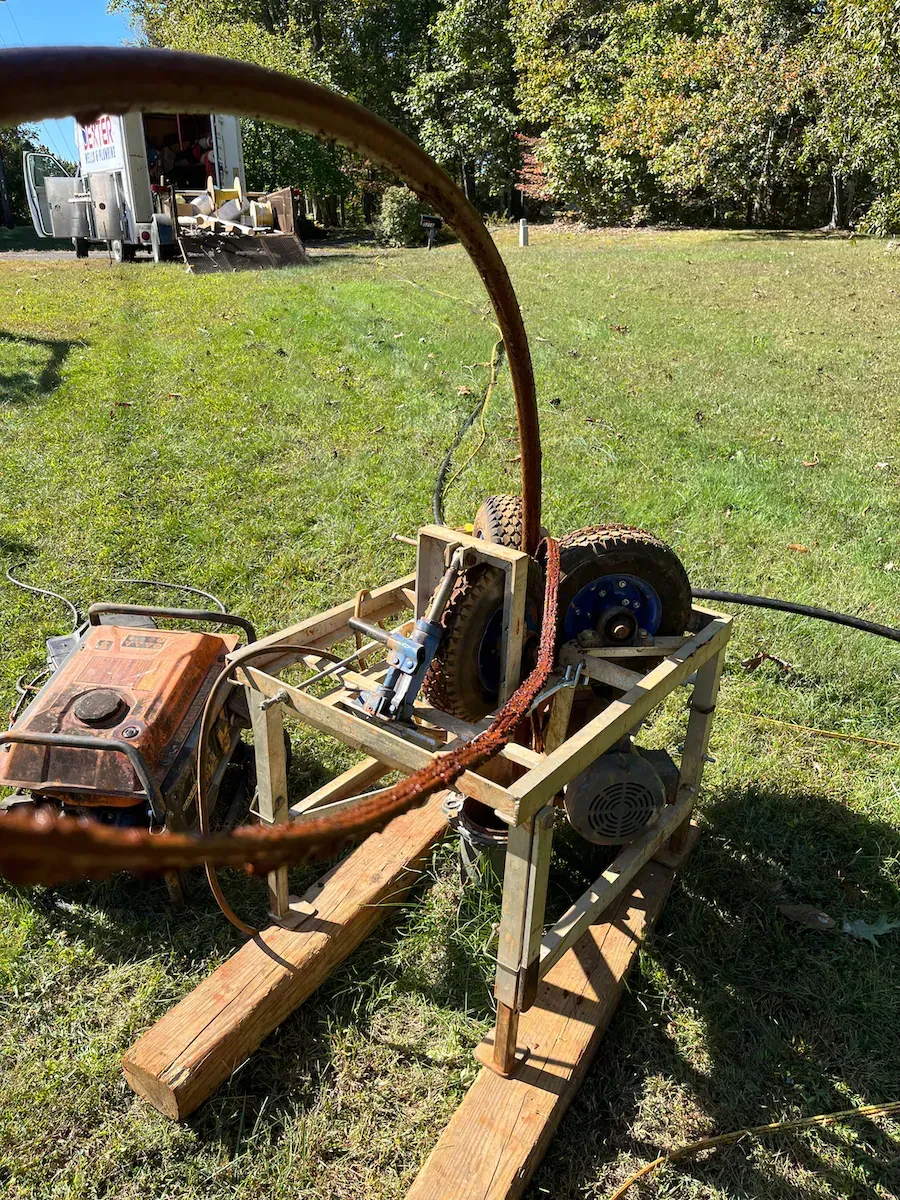
A drill rig makes progress at a rate set by what it is cutting through. Soft overburden goes quickly. Hard bedrock does not. The rig burns fuel, wears bits and occupies a crew for exactly as long as the hole takes, so the fairest way to price it is by the depth actually drilled.
This is why an honest contractor quotes you a per-foot rate plus the fixed items, rather than a single lump sum. A lump sum on a well means one of two things: either it is padded enough to cover the worst case, in which case you overpay when the well comes in shallow, or it is not, in which case there is a hard conversation coming when it does not.
Per-foot pricing puts the uncertainty where it actually lives and lets you see it.
What Decides How Deep You Have to Go
Depth is not chosen. It is discovered. The well goes down until it finds enough water to supply the household, and where that happens depends on things nobody controls.
Geology is the largest factor. The Shenandoah Valley sits on carbonate and shale formations that behave very differently from the harder rock further east around Culpeper. Water in fractured rock is not a uniform layer at a predictable depth. It is held in fractures, and you have to intersect enough of them.
Elevation and position on the slope matter more than people expect. A well on a ridge generally has to go deeper than one in a valley bottom nearby, because the water table roughly follows the terrain but flattens under it.
Nearby wells are the best available evidence. Virginia keeps well completion records, and knowing what neighboring properties needed is the closest thing to a forecast that exists. It is a guide rather than a guarantee, since two wells a few hundred feet apart can differ substantially.
Household demand sets the target. A well that would comfortably serve a small house may not serve one with several bathrooms, irrigation and livestock, so the yield you need affects how far you keep going.
The Line Items Beyond the Hole
The drilling gets the attention, and the rest of the system is a substantial share of the cost.
Casing is steel pipe installed through the loose material at the top and sealed into bedrock. It keeps the hole open and keeps surface water out. The depth of casing you need is set by how far down solid rock begins, which again varies by site.
Grouting seals the space between the casing and the borehole wall. This is what stops contamination running straight down the outside of your casing into the aquifer, and it is not optional.
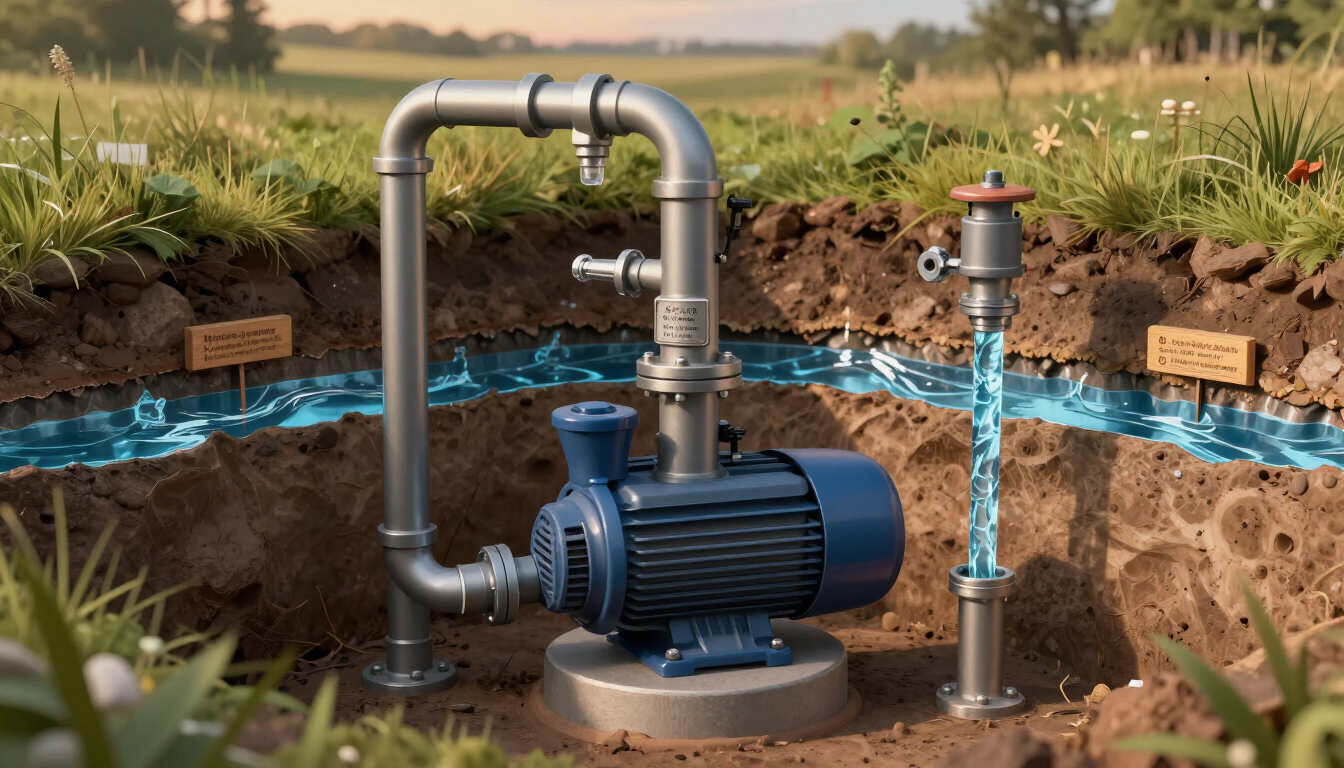
The pump, drop pipe, wiring and pressure tank turn a hole with water in it into running water in the house. Deeper wells need more drop pipe and more wire, and sometimes a larger pump to lift water further.
Trenching from the wellhead to the house is priced by distance, and it is a genuine variable. A well sited close to the house costs less to connect than one placed at the far corner of the property because that is where the water was.
What Happens If the First Hole Comes Up Dry
It is uncommon, and it is worth understanding before you sign anything, because it is the situation where the difference between contractors shows most clearly.
Fractured rock does not hold water evenly. A borehole can be drilled to a sensible depth and intersect too few water-bearing fractures to supply a household. When that happens the options are to keep going deeper in the hope of finding more, or to seal that hole properly and start a second one in a different spot.
Both cost money, and the fair question to ask any contractor before work starts is how they handle it. Some quote a dry-hole provision, some charge the per-foot rate regardless and are upfront that the risk sits with the homeowner. Neither is dishonest, but you want to know which one you have agreed to while it is still hypothetical rather than while a rig is parked in your yard.
This is also the strongest argument for taking neighboring well records seriously. They are not a guarantee, but a site chosen with reference to what worked nearby is a materially better bet than one chosen for convenience.
Permits and Rules, in Plain Language
Private wells in Virginia are regulated at the local health department level, and the requirements are there for reasons that protect you.
You need a permit before drilling begins. There are minimum setback distances between a well and any septic system, drain field, property line or other potential source of contamination, and those setbacks often determine where on a property a well can legally go. The completed well has to be constructed and sealed to standard, and it is tested before it is put into service.
None of that is optional, and a contractor who suggests skipping any of it is telling you something important about how they work. The permit and the completion record also become part of the property record, which matters when the house is sold.
How Long It Takes
The drilling itself is usually the short part, often a day or two on a straightforward residential well. What extends the timeline is everything around it: the permit, scheduling the rig, the pump installation, the trenching and electrical, and the water test before the system is signed off.
Weather and site access matter too. A rig needs to physically reach the location, and a wet spring on a soft approach can hold a job up longer than the drilling ever would.
How to Compare Two Well Quotes
Two quotes for the same property can look very different and both be honest, because they may not be quoting the same scope. Here is what to line up.
- The per-foot rate, stated separately from the fixed costs, so you can see what depth assumption is built in.
- The assumed depth. Both quotes should say what they are estimating and on what basis, usually neighboring well records.
- Whether casing is included per foot or quoted as an allowance.
- Whether the pump, tank and controls are in or listed as a separate phase.
- Trenching and electrical , which are frequently excluded from the low quote and are not optional.
- Permit fees and the water test , and who pulls the permit.
- Abandonment of the old well , if you are replacing one. Sealing it properly is required and it is real work.
The cheapest headline number is very often the one with the most excluded from it. Compare scope first and price second.
Should You Drill at All?
Before spending anything on a new well, it is worth being certain the old one actually needs replacing. A well that produces plenty of water but delivers it badly has an equipment problem, and a well with muddy water usually has a casing problem. Neither is solved by drilling.
Our guide on whether to repair your old well or drill a new one lays out how that diagnosis is made, and the warning signs of a well running dry covers the symptoms that genuinely do point at supply. If the water has changed rather than the pressure, start with a water test.
Why Valley and Culpeper Homeowners Call Dexter
We are a family firm, two generations in, with farming roots, working across Staunton, Waynesboro, Verona, Fishersville, Churchville and Augusta County, along with Culpeper and Culpeper County.
- Licensed Virginia well contractors , which covers the permitting and the completion record as well as the drilling.
- We quote the whole system , not just the borehole, so the number you see is the number that gets you running water.
- Cory handles service work , so you deal with a technician rather than a salesperson.
- Stainless steel and Grundfos pumps , chosen for service life rather than for the lowest line item.
- Warrantied work. We stand behind what we install.
- Same-day emergency service , because a house with no water cannot wait for a schedule.
Get a Quote for Your Property
The only way to get a real number is for someone to look at your site, check the well records for your area, and quote the actual scope. That costs you nothing and it is the only figure worth planning around.
Call us in Staunton at 540.820.0376 or in Culpeper at 540.718.9267. Tell us where the property is and whether you are replacing an existing well or drilling a first one, and we will tell you what the records nearby suggest.
Frequently Asked Questions
How much does it cost to drill a well in Virginia?
It is priced by the foot, so the total depends on the depth your geology requires, plus casing, grouting, the pump system, trenching, electrical and the permit. We do not publish a range because depth cannot be known in advance and a made-up figure would mislead you.
Why is well drilling priced per foot instead of a flat rate?
Because the rig burns fuel, wears bits and occupies a crew for exactly as long as the hole takes. A flat rate either builds in padding for the worst case or leaves a gap when the well goes deeper than assumed. Per-foot pricing puts the uncertainty where you can see it.
What decides how deep my well has to be?
Geology mostly, since water in fractured rock is held in fractures rather than in a uniform layer. Position on the slope matters too, as ridge wells generally go deeper than valley ones. Nearby well completion records are the best available guide.
What should be included in a well drilling quote?
The per-foot drilling rate, casing, grouting, the pump and drop pipe, pressure tank and controls, trenching to the house, electrical to the wellhead, the permit and the water test. If you are replacing a well, proper abandonment of the old one belongs in there too.
Do I need a permit to drill a well in Virginia?
Yes. Private wells are permitted through the local health department, with required setbacks from septic systems, drain fields and property lines. The completed well must be constructed and sealed to standard and tested before use, and the record follows the property.
How long does it take to drill a well?
The drilling is often a day or two on a straightforward residential well. The full timeline is longer because of permitting, scheduling the rig, pump installation, trenching, electrical and the water test before the system is signed off.
Why is one quote so much cheaper than another?
Usually because it excludes more. Trenching, electrical, the pump system and permit fees are the items most often left out of a low headline number. Compare the scope line by line before comparing the totals.